April 16, 2011
OF all the times to come into ‘contact’ with insurgents,
I’m pretty sure being dressed in nothing but a towel is not the best.
But a few days ago during a visit to a 45 Commando Patrol
Base in Kalang, in the district of Nad-e-Ali, this is exactly what happened.
The phrase ‘caught with your pants down’ springs to mind.
For the past five days we have been visiting the
Arbroath-based Royal Marines unit in their AO (Area of Operations) west of Camp
Bastion.
If anyone ever questioned the level of threat it was clearly
apparent after reports of someone laying an IED nearby.
However in the hours leading up to our first patrol of the
visit, ‘benign’ seemed to be the key word.
“It’s been quiet for months here,” said one officer.
“Because of the bad weather Afghanistan has experienced in
recent months, it has pushed back the poppy harvest, so they’re more focused on
that than fighting us.
“At the moment it’s pretty benign. Saying that though
we’ll go out there and it’ll be D-Day.
“There is also an IED threat and that is rising.”
Kitted out with our body armour, cameras and several
litres of water (it’s been around 37 degrees in the shade), we went out on a
two-hour patrol to meet and greet locals and to provide some ‘reassurance’ on
the ground.

 |
| On patrol |

Having been based largely at Bastion since arriving it was
good to finally get out on the ground to see the real Afghanistan.
While of course there was the ever-present danger of IEDs,
and contact with insurgents, the patrol provided a glimpse of Afghan life.
 |
| A young boy walks past a Royal Marine patrol |
Children, many dressed in brightly-coloured sparkly
clothing, flocked to greet us as we yomped.
The opportunity of a sweet, or even a pen, from the
marines seemed too much for even the most shy-looking child.


The local men also seemed keen to stop and say hello and
ask us about ISAF plans for roads, schools, and infrastructure in general.
 |
| A farmer smells a fresh flower while talking to British servicemen |
All in all you got the feeling the locals are happy with
the British being here, and what they are trying to achieve.
The marines were keen to ask how the men were, whether
they were happy, and whether they had heard of any Taliban activity in the
area.
The locals were also keen to show of their bazaar, which
had recently re-opened after insurgent activity.
My interpretation of a ‘bazaar’ was obviously very
different to the reality of an Afghan bazaar. It features a handful of shops,
ranging from a motorcycle repair show, a chemist, and a green grocer – all
contained within small sand-coloured mud huts.
The Afghans were clearly very proud of their bazaar and it
was reassuring to see their smiling faces.
Overall the patrol went without a hitch and we were back
by mid-afternoon.
After conducting a series of interviews with the lads we
settled into some downtime that evening ahead of another planned patrol the
next day.
And that’s when the contact occurred.
At about 9.30pm I decided to have a strip-wash to freshen
up after the hot and dusty patrol.
I was literally just throwing some water on my face when
the sound of gunfire filled the night sky.
I wasn’t alone. A marine was also washing at the time. We
looked up at each other, caught a glance, and then hurriedly made our way back
to our tents and body armour.
The whole base seemed to jump to its feet and ready itself
for a fight. Some marines ran towards the gate to provide back up, while others
readied themselves for the order to deploy.
And we stayed in our tent under guard until the order to
‘stand down’ came through at about 10.20pm.
It was a short exchange of gunfire just down the road from
the entrance to our base, at a vehicle check point, but it made everyone jump
to their feet.
Not least us. Nothing can quite describe the feeling of
hearing gunfire, especially knowing it is aimed at you or your surroundings.
In many ways life goes in slow motion. It’s like being in
an action film.
So with the following day came the investigation into the
event.
Keen to continue to show their presence in the area and to
provide reassurance, the marines took to the ground once more with us in tow.

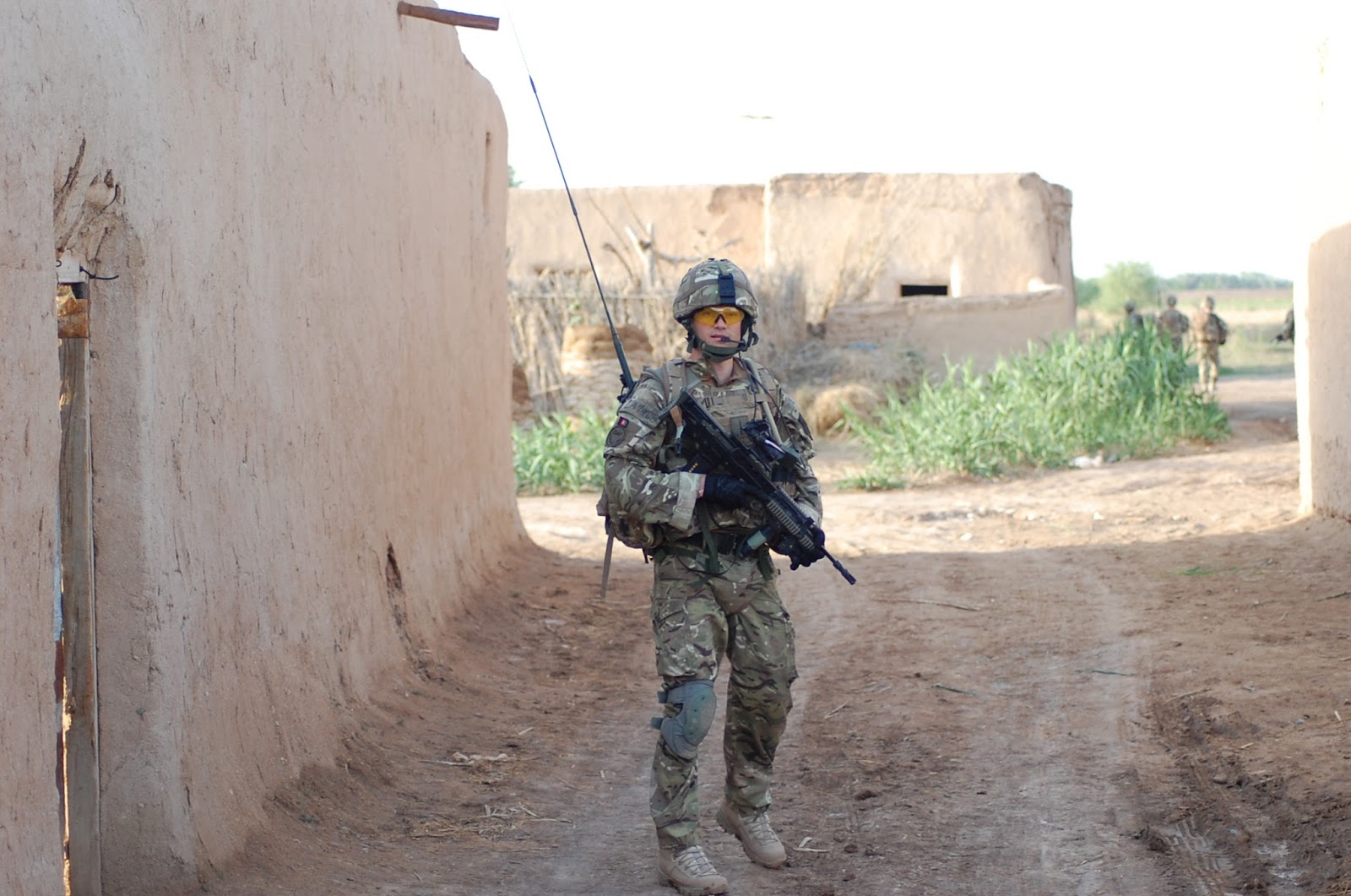
 |
| Providing reassurance 'on the ground' |
The locals were clearly upset and concerned by the
incident and wanted answers.
 |
| Angry Afghans confront British forces |
It had been the Afghan National Army – which had been
manning the check point – which had returned fire after coming under attack.
As one young Royal Marine officer put it “if someone puts
bullets into the side of your house, yes you’re going to be annoyed about it
for whatever reason.” Clearly.
The locals had gone two months without hearing the crackle
of gunfire so it was a shock to them, not least us.
So after the three-hour ‘reassurance and investigation’
patrol, we returned to base.
As you can understand, we weren’t told the exact
circumstances of the incident. Sometimes it’s probably better not to know.
Sadly, I’m sure it won’t be the last incident of its kind
in this area.
Stay safe fellas.
Twitter: @tristan_nichols
Twitter: @tristan_nichols
