Showing posts with label Afghanistan. Show all posts

Saturday

Post Afghanistan


May 29, 2011

THE affection of the UK to its armed forces was clearly presented to me this week in the form of 400 bags of post at an outpost near Gereshk.
We visited the MOB Price camp for three days for a veterinary project involving the Afghans and Danish and British battle groups.
On entering the camp you couldn’t help but notice the vast array of grey Royal Mail bags full to the brim with parcels and letters.
We chatted to the postman and he told us this amount of mail was “not unusual” week to week.
I couldn’t help but question that if they get this much mail in the summer, how on earth does the postal system survive at Christmas?
It’s a fine balancing act and a difficult problem to get round.

On one hand the parcel of sweets and accompanying hand-written note from Mrs Miggins of Devon, addressed to ‘A Soldier’, is a lovely gesture.
But if Mrs Miggins’ parcel and hundreds of others sent by the goodwill army of the UK clog up the system, it means that letters and parcels addressed to certain servicemen and women from their family and friends will be massively delayed.
Any serviceman or woman out here will tell you that it’s lovely to receive a parcel or letter from anyone. It makes them feel appreciated, wanted and special.
But if they have the choice of that, or post from their family, I know which one they’ll choose.
The post is flown over to Afghanistan by plane and then taken by helicopter to the outposts whose servicemen then organise it being delivered around the areas.
In itself it is a huge effort. And when you have say, 400 bags of post, it’s a colossal one at that.
Fortunately Stevie, the dedicated postie at Price, has a couple of volunteers who help him with the mountains of deliveries.
But how do you solve the problem? The generosity and goodwill of the nation is sadly a problem.
Last year alone 3,723 tonnes of mail was sent via the BFPO system.
I’m sure even Postman Pat would throw a fit at the thought of delivering that.
So there are now a series of websites, which have been set up to help balance the issue.
If you’re looking to send out post to a serviceman or woman, try visiting: http://www.mod.uk/DefenceInternet/DefenceFor/ServiceCommunity/BFPO/ for information and advice.
There are also countless charities – many of which can be found online – who can assist.
Aside from the postal service the last 10 days or so have been busy for us here at BFBS at Camp Bastion.
We’ve had several injuries and tragically more deaths of British servicemen in the last couple of weeks, but the mood is still very much of focus and determination.
Everyone takes a risk just by being here among this madness, however the level of commitment has never been more channelled as it is today.

Twitter: @tristan_nichols


Caught with my pants down


April 16, 2011

OF all the times to come into ‘contact’ with insurgents, I’m pretty sure being dressed in nothing but a towel is not the best.
But a few days ago during a visit to a 45 Commando Patrol Base in Kalang, in the district of Nad-e-Ali, this is exactly what happened.
The phrase ‘caught with your pants down’ springs to mind.
For the past five days we have been visiting the Arbroath-based Royal Marines unit in their AO (Area of Operations) west of Camp Bastion.
If anyone ever questioned the level of threat it was clearly apparent after reports of someone laying an IED nearby.
However in the hours leading up to our first patrol of the visit, ‘benign’ seemed to be the key word.
“It’s been quiet for months here,” said one officer.
“Because of the bad weather Afghanistan has experienced in recent months, it has pushed back the poppy harvest, so they’re more focused on that than fighting us.
“At the moment it’s pretty benign. Saying that though we’ll go out there and it’ll be D-Day.
“There is also an IED threat and that is rising.”
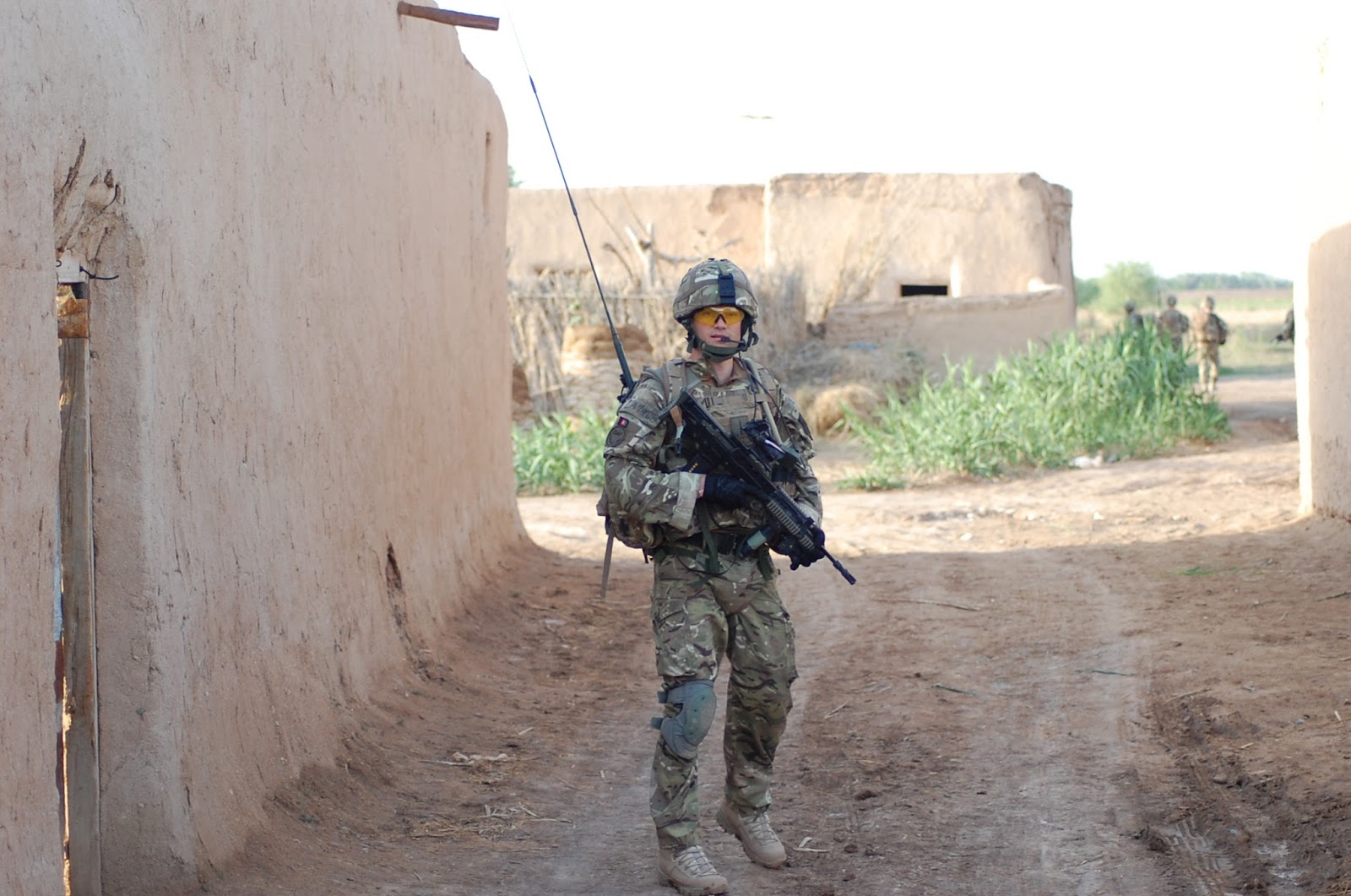
Kitted out with our body armour, cameras and several litres of water (it’s been around 37 degrees in the shade), we went out on a two-hour patrol to meet and greet locals and to provide some ‘reassurance’ on the ground.


On patrol


Having been based largely at Bastion since arriving it was good to finally get out on the ground to see the real Afghanistan.
While of course there was the ever-present danger of IEDs, and contact with insurgents, the patrol provided a glimpse of Afghan life.


A young boy walks past a Royal Marine patrol

Children, many dressed in brightly-coloured sparkly clothing, flocked to greet us as we yomped.
The opportunity of a sweet, or even a pen, from the marines seemed too much for even the most shy-looking child.


The local men also seemed keen to stop and say hello and ask us about ISAF plans for roads, schools, and infrastructure in general.


A farmer smells a fresh flower while talking to British servicemen

All in all you got the feeling the locals are happy with the British being here, and what they are trying to achieve.
The marines were keen to ask how the men were, whether they were happy, and whether they had heard of any Taliban activity in the area.
The locals were also keen to show of their bazaar, which had recently re-opened after insurgent activity.
My interpretation of a ‘bazaar’ was obviously very different to the reality of an Afghan bazaar. It features a handful of shops, ranging from a motorcycle repair show, a chemist, and a green grocer – all contained within small sand-coloured mud huts.
The Afghans were clearly very proud of their bazaar and it was reassuring to see their smiling faces.
Overall the patrol went without a hitch and we were back by mid-afternoon.
After conducting a series of interviews with the lads we settled into some downtime that evening ahead of another planned patrol the next day.
And that’s when the contact occurred.
At about 9.30pm I decided to have a strip-wash to freshen up after the hot and dusty patrol.
I was literally just throwing some water on my face when the sound of gunfire filled the night sky.
I wasn’t alone. A marine was also washing at the time. We looked up at each other, caught a glance, and then hurriedly made our way back to our tents and body armour.
The whole base seemed to jump to its feet and ready itself for a fight. Some marines ran towards the gate to provide back up, while others readied themselves for the order to deploy.
And we stayed in our tent under guard until the order to ‘stand down’ came through at about 10.20pm.
It was a short exchange of gunfire just down the road from the entrance to our base, at a vehicle check point, but it made everyone jump to their feet.
Not least us. Nothing can quite describe the feeling of hearing gunfire, especially knowing it is aimed at you or your surroundings.
In many ways life goes in slow motion. It’s like being in an action film.
So with the following day came the investigation into the event.
Keen to continue to show their presence in the area and to provide reassurance, the marines took to the ground once more with us in tow.


Providing reassurance 'on the ground'

The locals were clearly upset and concerned by the incident and wanted answers.


Angry Afghans confront British forces

It had been the Afghan National Army – which had been manning the check point – which had returned fire after coming under attack.
As one young Royal Marine officer put it “if someone puts bullets into the side of your house, yes you’re going to be annoyed about it for whatever reason.” Clearly.
The locals had gone two months without hearing the crackle of gunfire so it was a shock to them, not least us.
So after the three-hour ‘reassurance and investigation’ patrol, we returned to base.
As you can understand, we weren’t told the exact circumstances of the incident. Sometimes it’s probably better not to know.
Sadly, I’m sure it won’t be the last incident of its kind in this area.
Stay safe fellas.

Twitter: @tristan_nichols


The 'jam in the sandwich'


March 24, 2011

“YOU could well be the jam in the sandwich,” quipped an officer as we prepared for our first operation in Helmand’s Nad-e-Ali district.
In theory the set up was simple: around three formations from B Coy, 2nd Battalion The Royal Gurkha Rifles, sweep the rural setting searching Afghan compounds for weapons, bomb-making equipment and of course insurgents, joining up eventually at a central location.
As we made our way north, the others would take different approaches towards us clearing compounds along the way.
But at the same time a separate plan was being launched in the desert by 45 Commando Royal Marines, and the Brigade Reconnaissance Force. They were attacking a known Taliban position, which could have seen them pushed back towards the populated area where we were.
Fortunately for us, we saw no enemy.
Shots were reportedly fired at one of the formations, and the insurgents quickly dispersed into the wilderness.
This was the 2RGR’s first operation (named rather weirdly 'Op Tara-Gorga-Ti 24' – meaning ‘brave badger’) since taking over the area of operations in Nad-e-Ali (south) – and they were keen to impose their presence.


A Gurkha keeps watch over the patrol


As well as the lack of insurgents, there was also a distinct lack of weapons caches, explosives, or anything else of note.
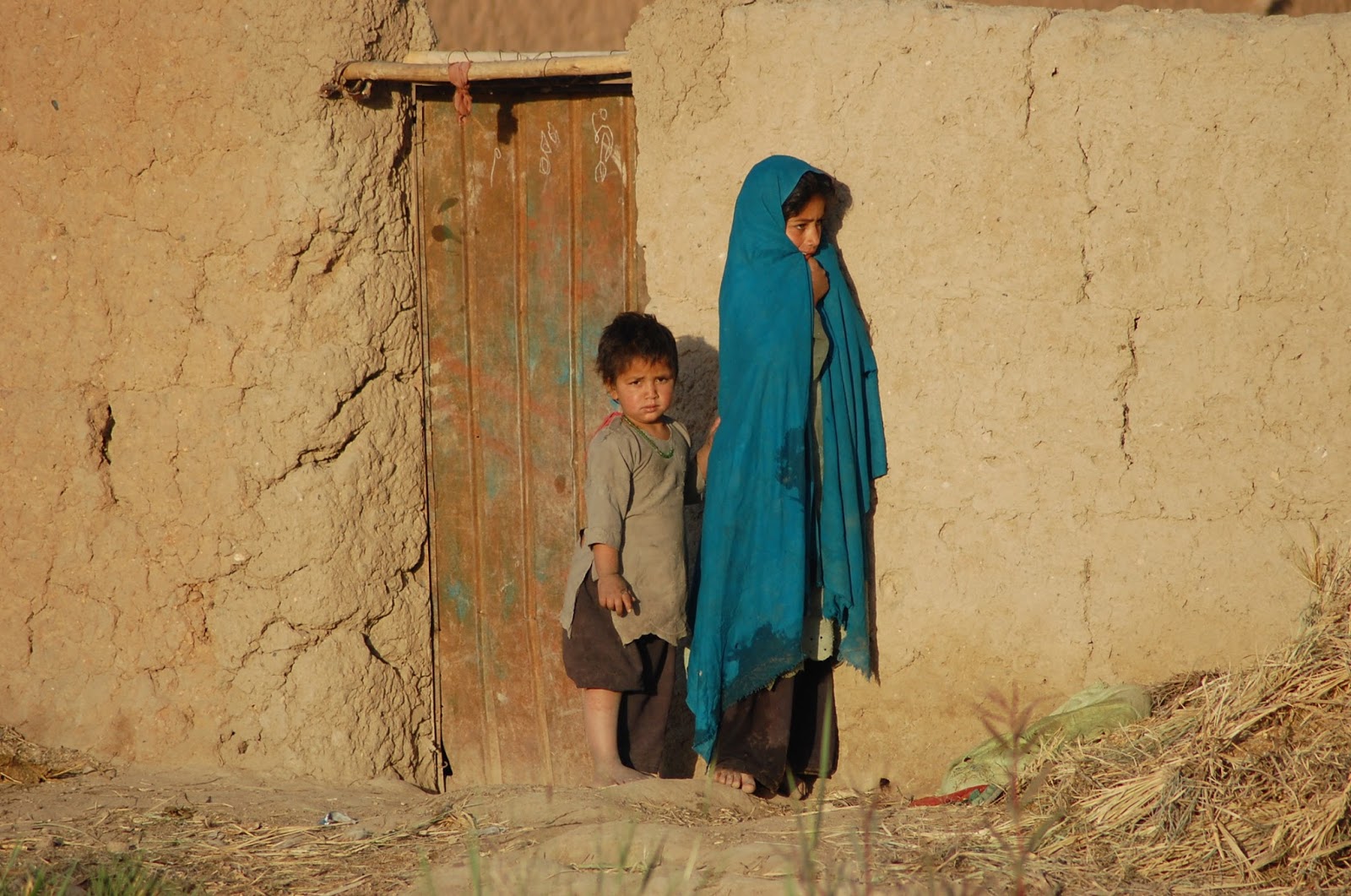
When the Gurkhas and British servicemen approached the compounds their Afghan occupants understandably looked terrified. 


A terrified Afghan family look on

This was especially understandable given the servicemen were accompanied by members of the Afghan National Army and Afghan Local Police – all carrying weapons.
While some may have seen the eight-hour operation as being a waste of time – given that nothing was found – it at least showed that the British forces are continuing their stance.


On patrol


It sought to show the enemy that they won’t rest, and that they are prepared to hunt down and find anything untoward.
Did the farmers hide the weapons or insurgents before we arrived? Had word got out that we were on our way? Were there really no weapons at all in a location which – in the not so distant past – had seen fierce fighting? Who really knows.
The experience of the operation for me though was a real eye opener.
It’s not every day you set off for a 10km jaunt into the unknown at 3.30am. Especially from a location as infamous as this patrol base - the site where a rogue Afghan police officer injured and killed a number of British servicemen last year.
With the only light being the near-full moon, the experience was as daunting as it was exhilarating.
Around whatever camp we find ourselves in from day to day there is a very present air of caution about what is happening right now. In terms of insurgent activity any serviceman or woman right now will tell you it’s “quiet”.
History dictates that the Taliban don’t like to fight in the winter, preferring instead to retreat. It’s strange but true – they don’t like the cold.
So as we bask in 42 degrees Celsius of heat, where are the bad guys? Surely after 10 years of fighting the enemy would know that the opportune moment to strike would be when a new brigade takes over the security of the region?
But yet still with that now been and gone, the dusty sleeping giant is seemingly yet to awake. One theory is that with Afghanistan’s winter being particularly harsh, it has affected the poppy harvesting.


A dried poppy

Evidence of opium being taken from the poppy

Certainly as we have patrolled around with the servicemen and women we have seen countless colourful poppy fields yet to be touched.
Many here think that this is the case, and that when the harvesting is complete in a matter of weeks, that is when the fighting will begin.
Of course the flip side is that maybe we are actually winning the war and the insurgents are facing defeat. It’s been quiet before around this time, but the feeling is that this time it’s almost too quiet.
Again, only time will tell.

Twitter: @tristan_nichols